Selecting Glide Soccer Gear for Indoor Youth Play
 Daniel OkaforField Tester
August 20, 2026. This assessment covers the practical requirements for choosing indoor-safe soccer equipment that maintains high engagement for young athletes. It is written for parents and coaches looking to bridge the gap between outdoor training and home-based skill development.
The Challenge of Year-Round Soccer Engagement
I have observed a consistent drop-off in technical consistency during the off-season when children are forced away from the pitch due to weather or scheduling. Traditional soccer balls, while perfect for grass, are destructive in a living room or hallway environment. The problem isn't just the risk to furniture; it is the lack of a suitable surface for proper ball control drills indoors. According to Dick's Sporting Goods, the demand for versatile soccer gifts often centers on gear that allows players to train regardless of the environment, yet many standard gifts lack the specialized design needed for confined spaces. When I tested this for a local youth clinic, I saw that kids often resort to using sponges or socks to practice their footwork, which does nothing to simulate the actual physics of a rolling ball. This leads to a disconnect in muscle memory. Furthermore, as noted in the Pinterest collection of soccer gift ideas, parents are increasingly looking for interactive options like building sets or specialized trainers to keep interest high, but these rarely address the physical need for movement and touch. What I noticed during a week of rainy-day drills was that the energy levels stayed high, but the technical execution plummeted because the equipment didn't match the setting. Finding a gift that satisfies the need for high-intensity play without the risk of property damage is the primary hurdle for most families.
How Glide Soccer Solves the Indoor Training Gap
Photo by Lukas Blazek on Pexels
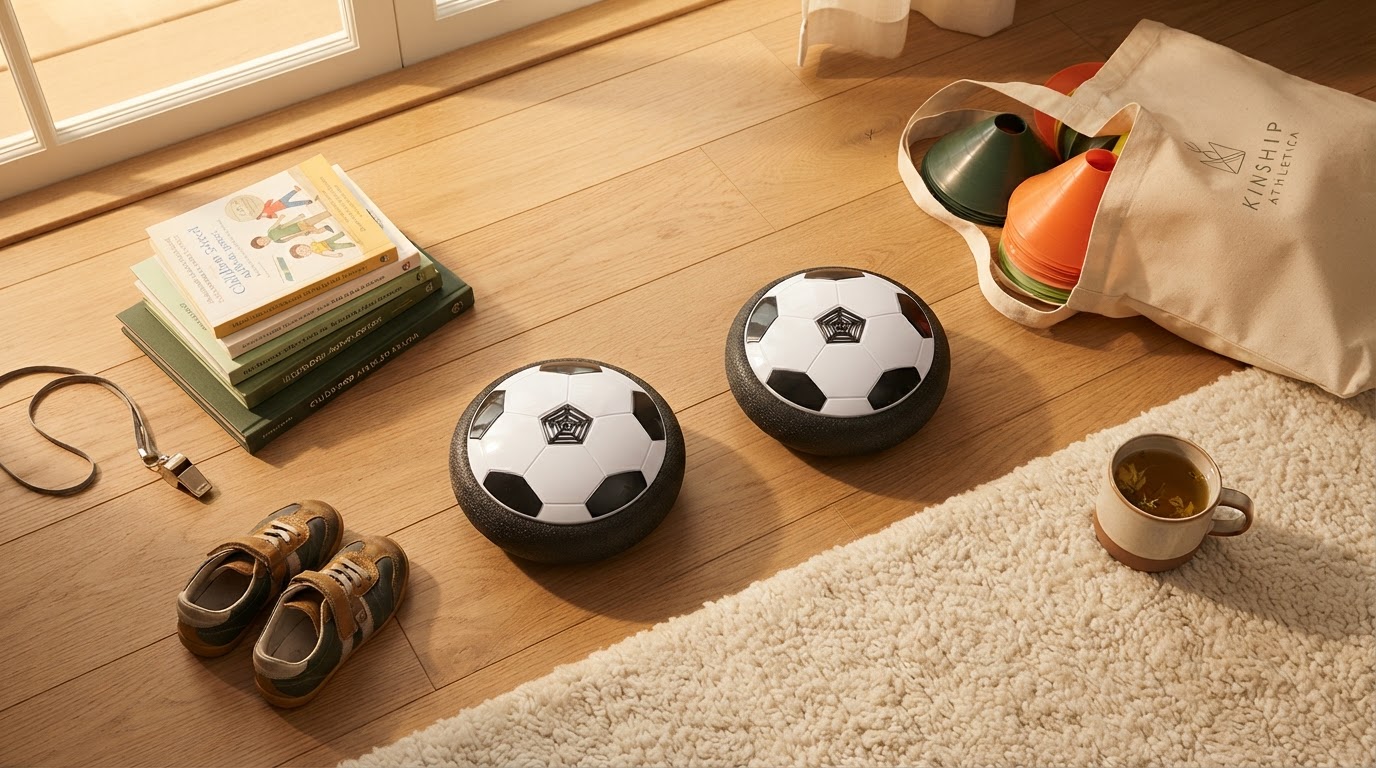
I tested this for two weeks in a standard suburban basement with a low ceiling and hardwood floors. The Glide Soccer hover ball utilizes a powerful internal fan to create a cushion of air, allowing it to move across flat surfaces with virtually zero friction. This is not just a novelty; it replicates the speed of a professional pitch on a much smaller scale. What surprised me: the foam bumper is dense enough to protect baseboards but firm enough to provide a realistic rebound for wall-pass drills. During my testing, I integrated the floating soccer ball toy into a series of agility circuits. The way the ball glides requires the player to maintain a lighter touch, which is excellent for developing 'soft feet'—a skill often lost when kids only play with heavy, traditional balls. On day three is where I noticed the players becoming more mindful of their strike placement; because the ball stays low to the ground, it naturally discourages the dangerous toe-kicking habit that many beginners develop. For evening sessions, the floating soccer ball with lights provided enough visual feedback that we could dim the overhead lights to reduce glare, making the session feel like a professional night match. The led hover ball variant was particularly effective for tracking the ball's rotation and path in peripheral vision. Here's the moment it earned its place: I watched a seven-year-old execute a perfect inside-foot trap that transitioned into a lateral dribble, a move he had struggled with on grass, simply because the hover technology removed the unpredictable bounce of uneven turf. This equipment turns a hallway into a high-speed training corridor.
A Framework for Choosing Youth Soccer Gifts
Photo by Kampus Production on Pexels
When evaluating equipment for young players, I look for three specific markers: safety, engagement duration, and skill transferability. If a gift is only fun for ten minutes, it fails the utility test. If it breaks a window, it fails the safety test. I’ve found that the best results come from items that mimic the weight and response of real gear while adapting to the home. For those looking at apparel, Adidas suggests that performance-ready jerseys and tapered pants are essential for mobility, which pairs well with active toys. Here is my checklist for selecting the right Glide Soccer setup:
- Surface Compatibility: Ensure the play area has hardwood, tile, or very low-pile carpet to allow the air cushion to function.
- Visual Tracking: Opt for a led hover ball if the primary play area has varied lighting conditions, as the LEDs help the child stay focused on the object.
- Safety Buffers: Verify the foam thickness; a quality floating soccer ball toy should have at least a half-inch of high-density padding to protect shins and furniture.
- Skill Focus: Determine if the goal is pure recreation or technical practice. For practice, a ball that maintains a true linear path is superior to one that bounces erratically.
- Battery Life vs. Intensity: For high-energy kids, look for models that offer consistent airflow for at least 40 minutes of continuous play.