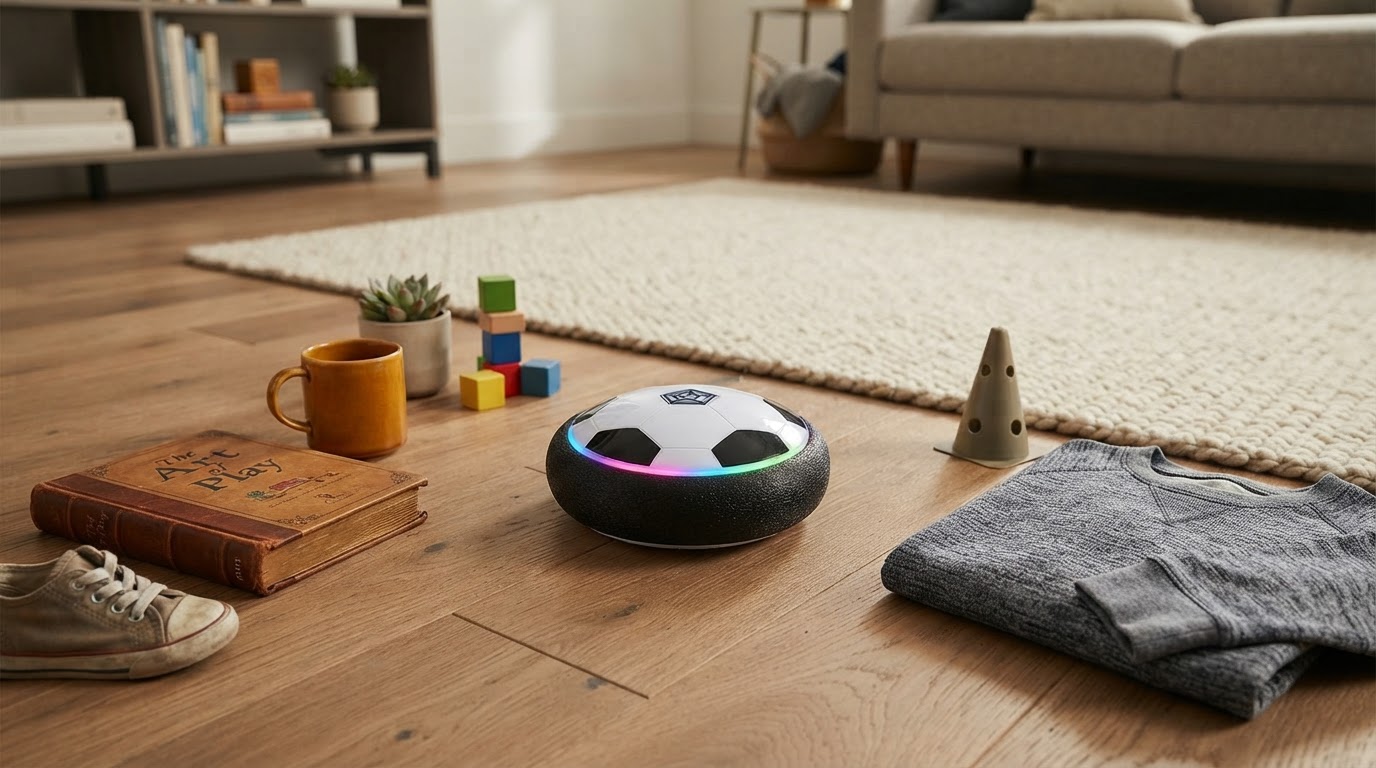
Glide Soccer for Indoor Play and Skill Development
 Priya RamanSenior Analyst
August 12, 2026. Glide Soccer represents a shift in how children engage with active sports within the constraints of an indoor environment. This analysis examines the technical and developmental benefits of hover-based play for families seeking consistent physical activity regardless of weather or space limitations.
The Challenge of Maintaining Active Play Indoors
Maintaining a high level of physical activity for children often becomes difficult when outdoor access is restricted by weather, time, or urban living conditions. Traditional soccer balls present a significant risk to home interiors, leading to restricted play that can stifle a child's natural energy. The core problem involves two axes: the need for high-intensity movement and the physical limitations of a domestic setting. Think of it as a matrix of safety versus engagement. When safety is prioritized through passive screen time, engagement in physical development suffers. Conversely, when traditional play is allowed indoors, the risk of property damage increases. According to Willy's Toys, products like the air flow indoor soccer ball utilize beautiful LED colorful lights and powerful air flow to glide over any smooth surface, effectively neutralizing the risk of bounce-related damage while maintaining high visual engagement for children ages 3 to 12. This technology allows for a transition from high-impact sports to a controlled, low-friction environment. Furthermore, as noted by reviewers on eBay, these devices function as a hybrid indoor-outdoor game, providing a versatile solution for birthday gifts and daily training. The primary hurdle for parents is finding a tool that mimics the mechanical feedback of a sport without the kinetic energy that breaks windows or scuffs walls. This is where the specific design of the air power soccer ball becomes a critical component of the modern playroom, offering a way to burn energy without compromising the integrity of the home.
How Glide Soccer Optimizes the Hover Experience
Photo by Tembela Bohle on Pexels
Glide Soccer addresses these domestic challenges by refining the pneumatic lift mechanism found in standard hover toys. The engineering focuses on creating a stable air cushion that allows the disk to move with minimal resistance across hardwood, tile, or low-pile carpet. By utilizing a high-speed internal fan, the unit generates constant downward pressure, which in turn creates the lift necessary for a frictionless experience. Once you see it this way, it becomes clear that the device is not just a toy but a specialized piece of equipment designed to facilitate foot-eye coordination. The air power soccer disk design specifically incorporates a soft foam bumper. This bumper serves a dual purpose: it protects furniture from impact and ensures that the rebound physics remain predictable for the user. Unlike a spherical ball that can travel in three dimensions, the indoor soccer disk is constrained to a two-dimensional plane. This constraint is actually a benefit for skill building, as it forces the player to focus on directional accuracy and weight of touch rather than dealing with the unpredictability of a bouncing object. When children use these tools, they are practicing the fundamental mechanics of a pass or a shot in a condensed space. The integration of LED lighting enhances this by providing visual tracking cues, which is particularly useful in lower-light indoor settings. This design philosophy ensures that the air power soccer ball remains a staple for active play, bridging the gap between sedentary digital entertainment and high-risk indoor sports. By focusing on the indoor soccer disk format, Glide Soccer provides a stable platform that is less likely to be kicked into the air, keeping the game safely on the ground.
A Decision Framework for Hover Soccer Selection
Photo by Amber Faust on Pexels
Selecting the right hover soccer equipment requires an understanding of the environment in which it will be used. Two axes matter here: surface texture and the age of the primary user. For younger children, the visual stimulation of lights and the softness of the bumper are paramount. For older children, the power of the air cushion and the durability of the internal motor take precedence to ensure the disk can handle more forceful kicks. The decision rule: prioritize lift power for carpeted surfaces and bumper density for hardwood areas with fragile furniture. When evaluating different models, consider the following checklist to ensure the product meets your specific household needs:
- Surface Compatibility: Verify the motor is powerful enough to clear the specific friction levels of your flooring, especially if using low-pile rugs.
- Bumper Material: Look for high-density EVA foam that offers both rebound elasticity and surface protection.
- Battery Efficiency: Ensure the power source can support both the pneumatic fan and the LED lighting systems for at least 30-45 minutes of continuous play.
- Safety Certifications: Confirm the materials are non-toxic and the battery compartment is secured against impact.
- Size and Weight: The disk should be heavy enough to stay grounded but light enough for a three-year-old to move with a light touch.