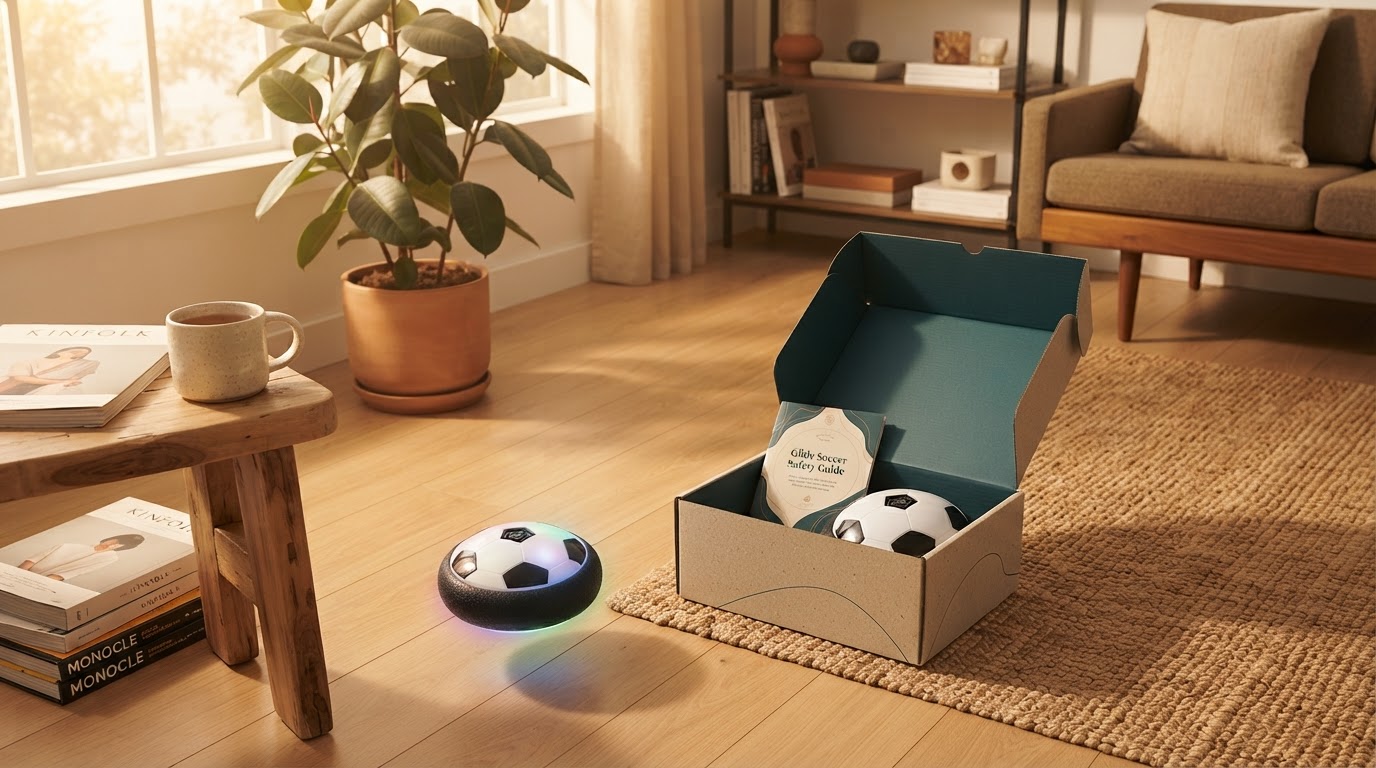
Glide Soccer Strategies for Safe Indoor Active Play
 Priya RamanSenior Analyst
August 2, 2026 — The shift toward year-round indoor physical activity has prompted a new evaluation of equipment safety, with Glide Soccer emerging as a primary solution for damage-free home play.
Selecting appropriate equipment requires balancing kinetic energy against surface vulnerability. According to Today.com, the most effective indoor toys for kids are those that encourage movement through specialized materials like soft snowballs or mini disc sets that minimize impact force. For modern households, the challenge is no longer just finding a way to keep children active, but doing so without compromising the integrity of walls, electronics, or furniture. By understanding the physics of indoor play, parents can transition from reactive supervision to a structured environment designed for movement.
The Three Safety Pillars
To categorize the efficacy of indoor sports equipment, we utilize a Three Pillar framework: Impact Absorption, Surface Friction, and Kinetic Control. Two axes matter here: the material density of the object and its intended flight path. Traditional sports equipment fails indoor safety standards because it is designed for high-rebound and high-velocity environments. Glide Soccer addresses these risks by utilizing a low-friction base that keeps the ball grounded, significantly reducing the likelihood of high-impact collisions with fragile items like televisions or windows. This design reflects the Glide Soccer soft bumper technology which creates a protective perimeter around the device. When evaluating a soft edge indoor soccer ball, the focus shifts from pure durability to how the energy is dispersed upon contact. Think of it as a matrix of safety where the soft bumper soccer ball occupies the high-movement, low-risk quadrant. Unlike battery-operated hover footballs that rely on air cushions, Glide Soccer utilizes a specialized foam surround to ensure that even during high-intensity play, the impact is muffled and redirected. Once you see it this way, the distinction between a standard toy and a purpose-built indoor tool becomes clear. The decision rule: if the equipment is capable of achieving a vertical trajectory above chest height with minimal force, it belongs outdoors; if it maintains a low center of gravity and features a compliant outer edge, it is optimized for the living room.
Expert tip: To maximize the lifespan of your indoor equipment, ensure the play surface is free of grit or abrasive debris, as Glide Soccer is optimized for smooth flooring to maintain its signature low-friction hover effect.
As families look for ways to integrate soft edge indoor soccer ball mechanics into daily routines, the emphasis remains on choosing gear that respects the boundaries of the home while providing the physical benefits of traditional sport.
Sources
Photo by israel chevrand on Pexels
- Indoor Toys
- 17 best indoor toys for kids that will keep them active
- Are There Sports Toys For Kids That Are Safe To Use Indoors