The High Energy Cost of Glide Soccer LED Illumination
 Maya ChenContributing Editor
July 23, 2026 — The trend of 'illuminated playtime' has positioned the Glide Soccer hover ball as a primary indoor activity for children aged 3 to 12. While the product promises effortless movement on smooth surfaces, the actual utility of dual-LED configurations depends heavily on battery throughput and surface friction.
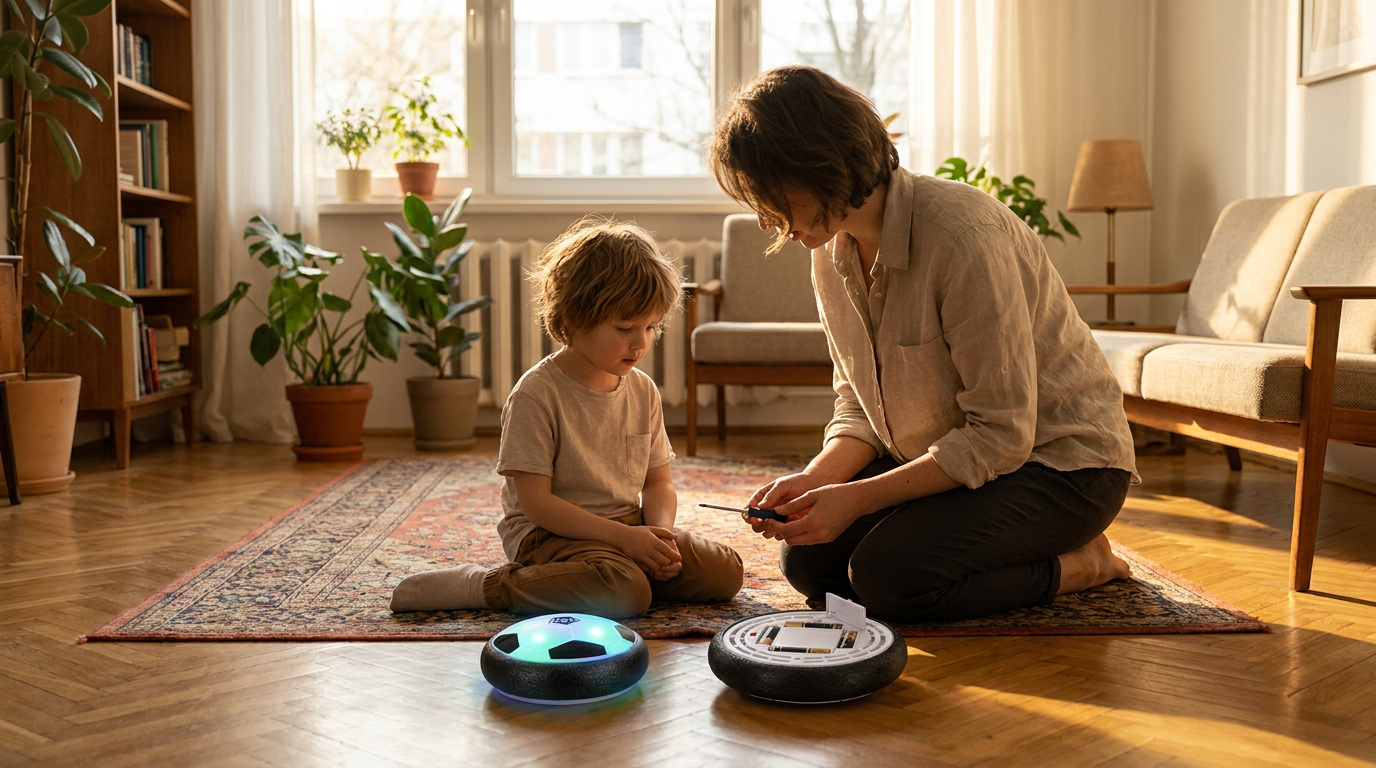
The conventional wisdom says that adding light-emitting diodes to a toy increases its value, but the math suggests a different trade-off. According to product specifications from eBay, these units require four AA batteries to maintain both the internal fan motor and the light array. While Willy's Toys notes the 'beautiful LED colorful lights' provide visual engagement, they represent a constant draw on a power source that is already struggling to maintain the air cushion necessary for the ball to glide.
Photo by Omar Ramadan on Pexels
Here's the part nobody talks about: the efficiency of the hover mechanism. According to a review by Willy's Toys, the ball requires a perfectly smooth surface to function as intended. Any deviance in floor leveling or the presence of debris increases drag, forcing the motor to work harder. When you factor in the dual-ball setup provided by Glide Soccer, you are looking at a total of eight AA batteries required to achieve the advertised 'dark room' effect. Run the math: for a high-frequency user, the cost of consumables will quickly outpace the initial purchase price of the toy itself.
Expert tip: To maximize the lifespan of your Glide Soccer unit, utilize rechargeable NiMH batteries with a minimum capacity of 2000mAh. Standard alkaline batteries often suffer from voltage drop-off under the combined load of the fan and LEDs, leading to 'grounding' where the ball ceases to hover before the batteries are actually depleted.
Despite the aesthetic appeal mentioned in Instagram testimonials from users like DWWxSMlEeft, the long-term durability of the 'special high-quality materials' remains to be seen under heavy impact. I'll change my mind when I see a third-party stress test confirming the chassis can withstand 500+ high-velocity impacts against baseboards without compromising the LED soldering or the fan housing. Until then, it remains a high-maintenance novelty.