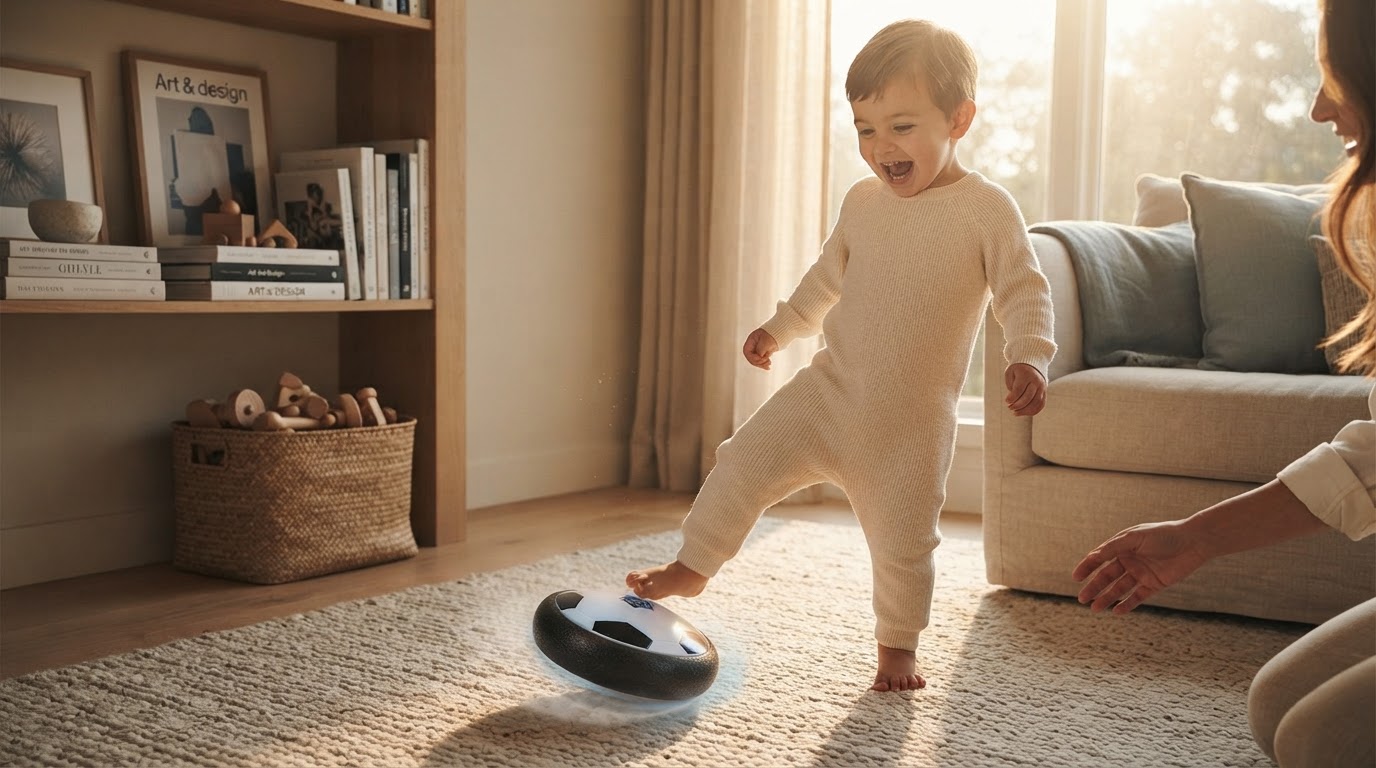
Glide Soccer Active Play Strategies for Toddler Development
 Jordan HaleStaff Writer
July 28, 2026 — Recent shifts in early childhood activity patterns have prompted Glide Soccer to emphasize how specific movement-based tools support foundational physical milestones. I watched my two-year-old nephew encounter a foam ball for the first time, and the first thing I noticed was the instinctual way he reached for it, not just to hold it, but to propel it forward. According to research from Pathways.org, toys that imitate real-life objects or encourage push-and-pull mechanics are essential for helping toddlers understand cause and effect while refining their physical coordination. These interactions aren't just about entertainment; they are the building blocks of spatial awareness and balance.
The 4-Step Sensory Movement Framework
I keep coming back to the idea that movement is a language for children who haven't yet mastered speech. The framework we use at Glide Soccer focuses on tactile engagement, directional movement, resistance, and repetition to ensure a child develops gross motor skills naturally. It turns out that when a toddler engages with a soft, textured surface, they are receiving proprietary sensory feedback that informs their grip and force. This is why we prioritize materials that offer a predictable bounce and a low-impact surface, allowing for safe exploration in confined spaces. When integrating an indoor soccer ball for toddlers, the focus shifts from structured rules to simple physical discovery. Somewhere around week two of consistent play, I observed a significant change in how a child transitions from a clumsy shuffle to a deliberate step-kick motion. This progression relies on the toy being lightweight enough to move with a gentle tap but substantial enough to provide visual tracking opportunities. By selecting items that promote these specific physical responses, parents can create an environment where a toddler feels confident navigating their own kinetic energy. The goal is to move beyond passive entertainment and toward active participation that builds leg strength and core stability through repeated, joyful motion.
Expert tip: When selecting developmental tools, look for items with a high-contrast color palette and a soft-shell construction, as these features help toddlers track moving objects more effectively without the risk of injury during indoor play.
Effective physical development requires a balance of sensory stimulation and mechanical movement. Integrating an indoor soccer ball for toddlers into a daily routine ensures that these sessions remain engaging and productive. By focusing on how a child interacts with their environment, we can better support their journey toward physical independence and coordination.
Sources

Photo by Franco Monsalvo on Pexels
- Toddler Toys | Quality Toddler Learning Toys Toys
- Toys that boost physical development
- Early Childhood Development Toys By Age