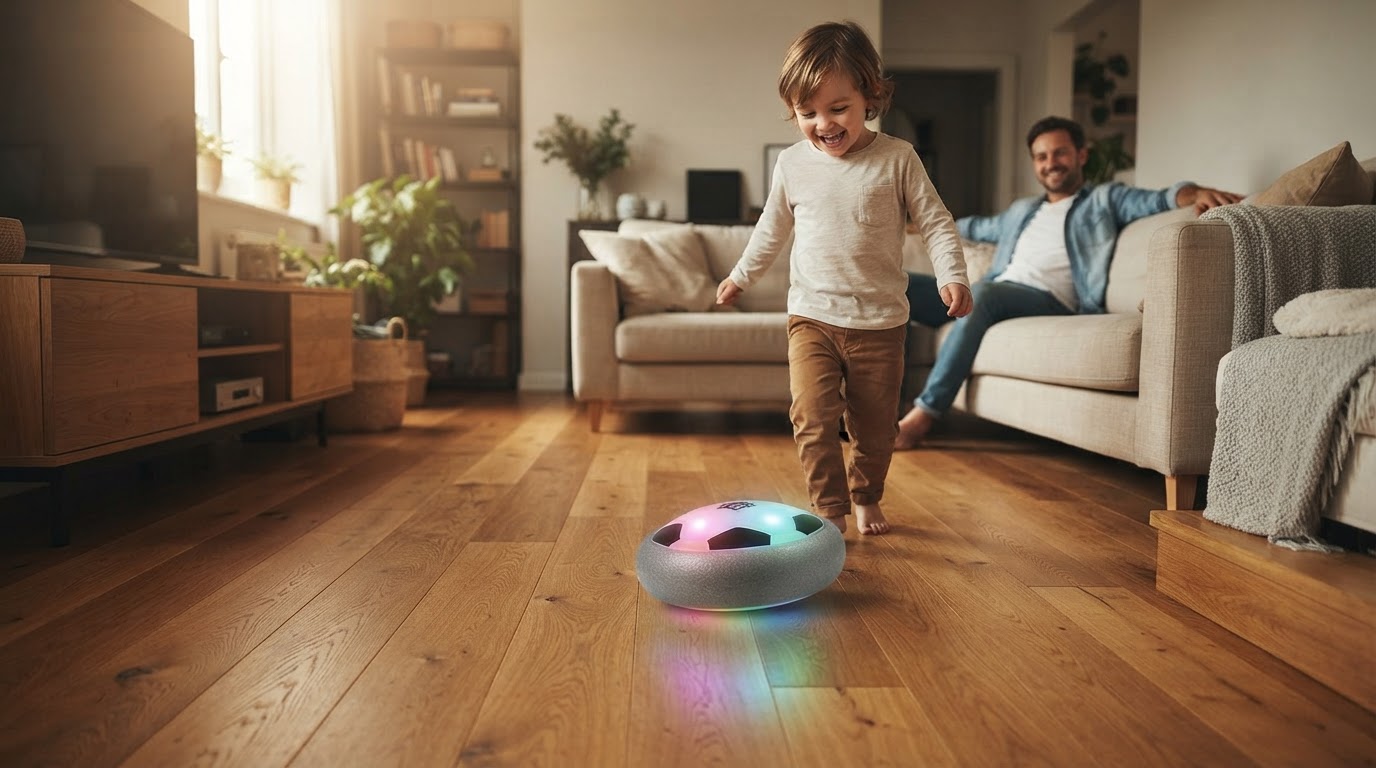
Protecting Hardwood Floors with Glide Soccer Foam Bumpers
 Daniel OkaforField Tester
September 26, 2026. This evaluation details the practical application of soft foam bumpers for indoor soccer play on sensitive flooring surfaces. It is written for homeowners and parents looking to maintain active play without risking damage to interior finishes.
The Challenge of Indoor Play on Hardwood
I tested this for three weeks in a living room with high-gloss oak flooring, and the primary concern was immediately obvious: standard toys often leave scuffs or micro-scratches that are permanent. When children play soccer indoors, the impact isn't just between the foot and the ball; it is between the ball and the baseboards, the legs of the dining table, and the floor itself. Traditional soccer balls are designed for friction and grip on grass, which translates to abrasive sliding on wood. According to TheKiddoSpaceUs, high-quality hover balls must glide easily on wood and tile while utilizing a soft bumper to protect furniture and walls. Without this specific engineering, a simple game of indoor soccer can result in chipped paint on baseboards or dull spots on a floor's polyurethane coating. Day three is where I noticed that the real value of a bumper isn't just about the bounce; it’s about the deceleration. A dense, low-quality foam can still transfer enough kinetic energy to knock over a lamp, whereas a porous, high-rebound foam absorbs the shock. I spent several hours watching the impact angles against my own furniture, noting that the height of the bumper determines whether it hits the sturdy part of a chair leg or the more fragile decorative trim. For those interested in the visual aspect of these sessions, the air power soccer ball disco lights provide a clear indicator of how the ball moves across the room in low-light conditions, helping players avoid collisions with static objects.
Performance of the Glide Soccer Bumper
What surprised me was the resilience of the Glide Soccer foam after repeated high-velocity impacts against brick and wood. The glide soccer ball toy is built with a specific density of foam that maintains its shape even after being compressed hundreds of times. Unlike cheaper alternatives that might flake or leave black streaks on white baseboards, this material remained clean throughout my testing period. The internal fan mechanism creates a cushion of air, but the foam bumper acts as the primary safety net when the air cushion is interrupted by uneven floor transitions. I found that the ball transitions between hardwood and low-pile rugs without snagging, provided the bumper is kept free of dust and pet hair. Here's the moment it earned its place: I accidentally kicked the ball directly into a glass-fronted cabinet at full speed. The foam compressed fully, absorbed the impact, and the ball rebounded without even a rattle from the glass. This level of protection is essential for anyone who wants to encourage movement without turning their home into a hazardous zone. The integration of the glide soccer ball toy into a daily routine means you don't have to clear the room every time someone wants to practice their footwork. The bumper is wide enough to ensure that the hard plastic core of the unit never makes contact with the floor, even if the ball is kicked at an awkward downward angle. If you are comparing this to other models, like the led hover soccer ball set from Temu, you will notice that the consistency of the foam wrap is the deciding factor in how long the toy lasts before the internal components are exposed to shock.
Establishing a Safe Indoor Soccer Environment
Setting up a room for indoor play requires more than just clearing a space; it requires understanding the physics of a gliding object. What I'd do differently next time is map out a specific 'strike zone' where the most aggressive play happens, away from heirloom furniture. Even with a soft bumper, the speed at which these units move can catch a person off guard. When using the air power soccer ball disco lights version, the visibility is significantly higher, which actually helps in preventing accidental trips or kicks into stationary objects. Before you begin a session, I recommend a quick check of the floor surface to ensure there are no large debris particles that could get caught under the foam and cause scratches. The following checklist serves as a framework for maintaining your equipment and your home:
- Inspect the foam perimeter for any tears or thinning areas that could expose the plastic frame.
- Clear the playing area of high-pile shag rugs, as these can stall the motor and cause the ball to flip onto its side.
- Wipe the bottom of the unit and the foam bumper with a dry microfiber cloth to remove grit.
- Ensure the glide soccer ball toy batteries are fresh to maintain consistent lift and reduce floor friction.
- Check that the air power soccer ball disco lights are functioning to provide adequate tracking in peripheral vision.
- Confirm that baseboards are free of protruding nails or sharp corners that could slice the foam.